
Verification Standards for Modern Banking.
Accuracy in the digital financial sector is not an accident; it is the result of rigorous cross-referencing and adherence to federal clearing house protocols. We detail the mechanics of the arvest bank routing number system and the verification cycles that ensure fund security.

DATA POINT Verification typically involves 3 distinct layers of identity and routing confirmation to satisfy KYC (Know Your Customer) regulations.
The Anatomy of a Routing Number
Every nine-digit string serves as a geographical and institutional fingerprint. Understanding how these numbers are parsed is essential for accurate ACH transfers and wire processing within the US banking system.
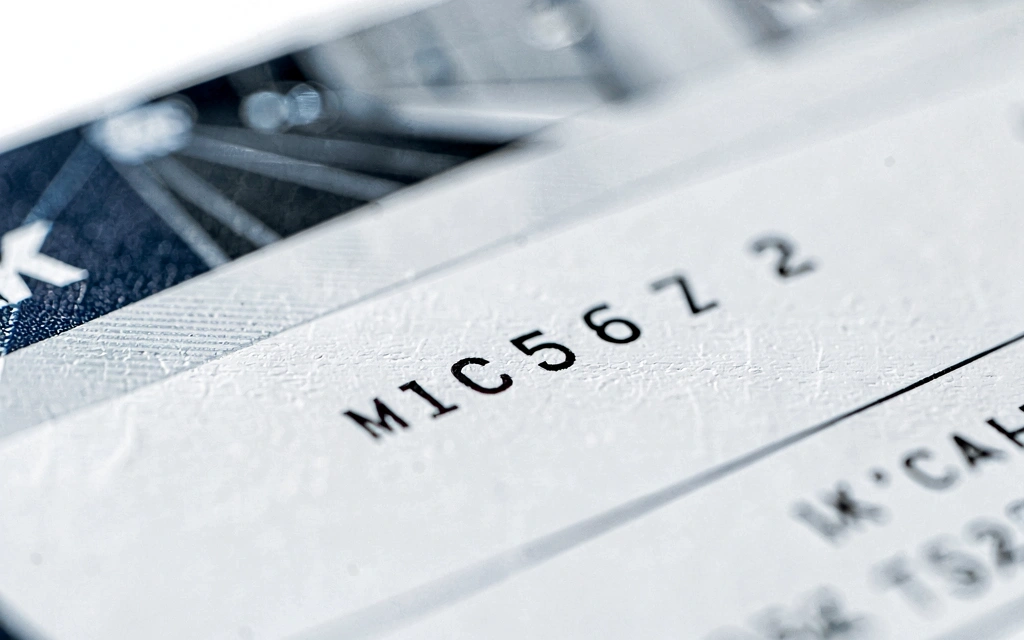
Federal Reserve Routing: The first four digits identify the Federal Reserve District and the specific processing center associated with the bank's headquarters.
Institution Identifier: Digits five through eight provide the unique ABA (American Bankers Association) number for the specific financial entity.
Regional Discrepancies
Infrastructure for an arvest bank routing number may vary depending on whether the account was opened in a specific region such as Arkansas, Oklahoma, or Missouri. While central systems often consolidate processing, regional transit numbers still play a role in traditional check processing.
Note: Using a routing number from an incorrect district can result in delays of 3–5 business days as the ACH network attempts to re-route the batch.
Security Anchor
The ninth digit is a "check digit," calculated via a specific mathematical formula known as the Luhn algorithm variant for banking. This prevents human entry errors from triggering faulty transfers.
Learn about our standardsVerification Cycles Overview
Financial updates are rarely instantaneous. Understanding the settlement rhythm prevents unnecessary friction during the arvest online banking login process and subsequent fund movement.
Instant Transmission
Minutes to Hours
Initial data entry and account lookup protocols happen in real-time. When you enter credentials for your arvest bank login, the system immediately checks the encrypted local database. This phase is most vulnerable to phishing; always verify you are on a "https" protected domain.
Standard Settlement
1-2 Business Days
The ACH (Automated Clearing House) network batches transactions. For arvest bank online transfers, the instruction is sent and verified against available funds at the daily cutoff (typically 4:00 PM EST). Clerical errors in the memo line or recipient name are usually identified during this window.
Enhanced Audit
3-5 Business Days
Mortgage-related transactions, specifically those involving arvest central mortgage, often require an extended audit. This cycle includes identity validation through government-issued documents and verified proof of residency to meet federal compliance requirements.
Safeguarding Digital Interaction
Our standards for banking procedure documentation are built on the principles of transparency and technical defensive posture.
Multi-Factor Authentication (MFA)
Accessing the arvest online banking login portal is protected by a secondary verification layer. Typically, this involves a time-sensitive code sent via SMS or a dedicated authenticator app. We recommend the app-based approach to mitigate SIM-swapping risks prevalent in mobile-only banking.

Encryption Depth
Browser Integrity
Always verify the lock icon in your browser address bar before performing an arvest login. Our procedures suggest that legitimate sites will show a valid certificate issued by an accredited authority.
Document Requirements for Identity Validation
Banks in the 10001 ZIP code and across the US must comply with federal Know Your Customer (KYC) laws. This requires users of arvest banking online to maintain updated records, often requiring digital uploads of government ID, utility bills, or Social Security documentation during the account recovery or high-value transfer phases.
View Mortgage Documentation RequirementsOperational Clarity
Understanding the distinction between local branch service and central processing hubs is vital for managing your arvest mortgage login and ongoing financial planning.
Did you know?
Central mortgage hubs handle the underwriting and document storage, while your local branch remains the primary point for notary services and physical deposits.
| Transaction Type | Verfication Standard | Risk Profile |
|---|---|---|
|
ACH Transfer
Electronic batch payment
|
Matching of arvest bank routing number against internal database; checks for active account status. | Low/Moderate |
|
Mortgage Sign-in
User portal access
|
Username/Password verification + Session Fingerprinting + Multi-factor device token. | Moderate |
|
Wire Clearing
High-value real-time transfer
|
Manual callback protocols may apply. Immediate deduction and ledger finality status. | Critical |
|
Account Recovery
Forgotten credential reset
|
Social Security verification, previous address history audit, and manual fraud review if anomalies detected. | Critical |

Regional Support
While our digital guides cover global standards, specific regional requirements for arvest online banking may apply. Visit our office at 123 Main Street, New York for complex identity verification tasks.
Compliance Note
"Financial data security is a collaborative effort between the institution's technical layers and the user's operational discipline."
We prioritize maintaining account hygiene by recommending regular review of transaction history to ensure all unauthorized activity is caught within the 60-day federal reporting window.
Ready to access your secure portal?
Proceed to the official registry to manage your credentials securely.